.png)

Meta released Muse Code and Muse Spark 1.2 on August 5, 2026. The pair is another clear signal that long-sequence, agentic tool calling is now the center of gravity for coding models, not just raw next-token code completion.
Muse Spark 1.2 is a coding-focused update to Muse Spark 1.1, with explicit improvements in code generation, complex debugging, codebase understanding, and end-to-end developer workflows. Meta says it scaled up training compute on coding tasks and expanded training environment diversity, while keeping the model strong at general agent behavior.
The important part for production evaluation is that this is not positioned as a narrow code completion model. It was trained on long-horizon coding tasks including whole-repository generation, large end-to-end projects, and auto-research. That points to a model that should be judged on repo-scale planning, tool use consistency, and recovery from intermediate failures rather than on isolated function synthesis.
The model also comes in two pricing tiers under different IDs:
muse-spark-1.2 at $1.25 / 1M input tokens and $4.25 / 1M output tokensmuse-spark-1.2-contributor at $0.10 / 1M input tokens and $0.20 / 1M output tokens if you allow Meta to use your data “to improve our products”That pricing split matters operationally. It turns data-sharing consent into an infra and spend decision, not just a legal checkbox. If you benchmark against current coding-agent workloads, the contributor tier is aggressively cheap relative to the standard tier and should be evaluated separately, especially for high-volume internal use.
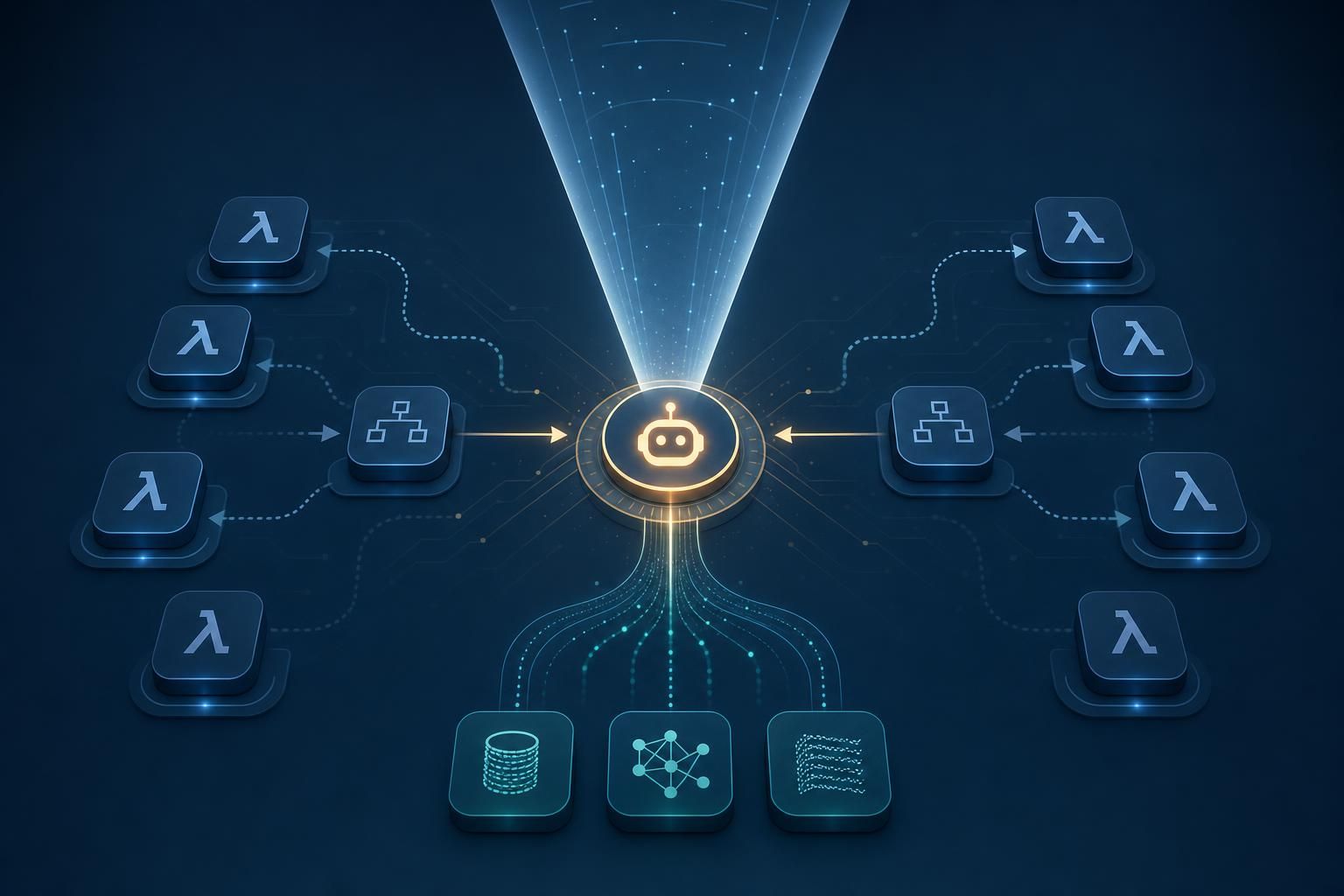
Meta also shipped Muse Code, the coding agent paired with Muse Spark 1.2. The release framing is blunt: Meta built its own coding agent to get the long-sequence tool calling working well enough for real software engineering tasks.
That pairing is the key product move. Muse Spark 1.2 was co-trained with Muse Code so the model’s behavior matches the harness, goals, compaction, and subagent patterns used by the toolchain. The training also included rejection-sampled harness trajectories and recipe optimizations for those workflows, plus integration of the Muse Code toolset to maximize harness compatibility.
For ML engineers, that reads like a strong bias toward system-level performance over standalone model quality. If the model is optimized for a specific agent harness, then evaluation should include the same harness, same tool surface, and same task distribution. A generic benchmark suite will likely understate the value of the release if your workload looks like the one Meta trained on, and overstate it if your production toolchain differs materially.
Muse Code reportedly ships for macOS and Linux, with a one-line install path on Mac. That makes it look more like a developer-facing agent product than a research demo, and suggests Meta expects users to adopt the agent rather than wire the model into custom orchestration from scratch.
The public pricing puts Muse Spark 1.2 in the same conversation as other low-cost agent models rather than premium frontier APIs. OpenRouter lists a 1,048,576-token context window, which is relevant because repo-scale coding agents often bottleneck on context retention and task decomposition before they bottleneck on raw reasoning quality.
The right comparison set is not just “best code model.” It is:
The pelican-riding-a-bicycle SVG example is a nice visual anecdote, but the more interesting claim is that Spark 1.2 is a “small but material improvement” over Spark 1.1 on the same weird benchmark. That usually means the model got better at structured generation and iterative correction, which is exactly what coding agents need when they are manipulating codebases rather than emitting one-shot snippets.
For teams evaluating adoption, the practical test is whether Muse Code plus Muse Spark 1.2 reduces scaffolding in your existing agent stack. If it does, the pairing may justify replacing a more generic LLM backend. If it does not, the model’s long-context strengths may still be useful, but only behind your own agent orchestration and tool abstractions.